[ad_1]
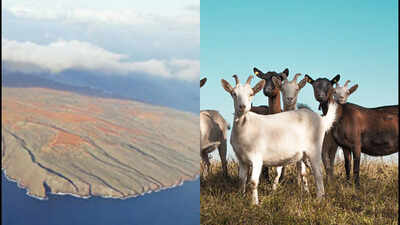
hungry goats
From an island carved by voyagers, farmers and sacred traditions comes the unlikely story of 1000’s of hungry goats.
They grew on Kaho’olawe from a small 18th-century introduction right into a herd of maybe 50,000, stripping the vegetation and hastening erosion over the panorama.
Right this moment, the Hawaiian island is the main target of a decades-long effort to revive its ecosystems and cultural heritage.
The story of Kahoʻolawe is certainly one of environmental destruction, Indigenous activism and an ongoing effort to carry a sacred panorama again to life, states the Kahoʻolawe Hawaii govt web site.
In accordance with the web site, archeological proof suggests native Hawaiians arrived on Kahoʻolawe round 400 A.D.
Over the centuries the island turned an vital navigational middle and supported fishing communities, agriculture, an adz quarry and locations of spiritual ceremony.
The cultural significance of the island is demonstrated by the some 3,000 archeological and historic websites and options that have been documented by 2004.
Kahoʻolawe, as soon as a wahi pana and puʻuhonua, is a sacred website, a spot devoted to Kanaloa, the Hawaiian God of the ocean.
However centuries of conventional use have been adopted by dramatic shifts. Scroll all the way down to learn the main points.
Introduction of goatsGoats have been launched to Kahoʻolawe in 1793, as a present from Captain George Vancouver to Maui chief Kahekili.
With no pure controls in place the inhabitants exploded. Cattle, sheep and goats have been introduced in when ranching started on the island within the nineteenth century. Uncontrolled grazing destroyed vegetation, and resulted in extreme soil loss.
By the late Eighteen Nineties the island supported lots of of cattle and a few 15,000 sheep. Finally the goat inhabitants alone was estimated at 50,000.
The animals ate vegetation that may have helped to bind the island’s fragile soils in place. Lack of plant cowl elevated erosion that delivered sediment to surrounding waters and broken the island’s watersheds.
Ranch to bombing varyThe army use added to Kaho‘olawe’s environmental woes. After the assault on Pearl Harbor in 1941, america imposed martial legislation in Hawaii and started utilizing Kahoʻolawe as a bombing vary.
In 1953 possession handed to the U.S. Navy with the proviso that the island be returned in a liveable situation.
For the reason that Seventies, Indigenous Hawaiian activists have opposed the bombing by occupations and authorized actions.
Their work helped increase consciousness for the island’s cultural websites and environmental destruction. President George H. W.
Bush had the bombing stopped in 1990. Congress later licensed the return of Kahoʻolawe to Hawaii and appropriated $400 million for the removing of unexploded ordnance.
A protracted highway to therapeuticIn 1994, the navy transferred possession to the State of Hawaii, which established the Kaho‘olawe Island Reserve Fee to handle the island.
It took years to clear the ordnance. By 2004, about 75 % of Kahoʻolawe had been surface-cleared, however huge areas have been nonetheless unsafe to enter with out an escort.
One other key component of the restoration effort was goat eradication.
The final feral goats have been eliminated after some 200 years on the island, eradicating a serious supply of grazing strain and restoring the flexibility for vegetation restoration.
Re-creating a residing panoramaMore and more, restoration efforts have turned to watershed restore, erosion management, and re-establishment of native vegetation on broken lands.
State-supported conservation packages from 2004 to 2016 offered roughly $1.9 million in Clear Water Act funding, matched with about $1.9 million in volunteer restoration work.
These efforts helped to revive focused watersheds and scale back sediment runoff. Since 2013, the Aloha Kahoʻolawe program has additionally been working to ascertain sustainable funding for the island’s long-term restoration.
The transformation of Kahoʻolawe just isn’t but full.
However the story of the island is starting to vary, from exploitation and environmental destruction to restoration and cultural renewal.
Killing tens of 1000’s of goats was solely a primary step.
The broader aim is to carry again a panorama the place native crops can flourish, watersheds can get better, and Kahoʻolawe can as soon as once more be a spot of cultural connection, studying and reverence.
In 1793, goats have been launched to Hawaii’s Kahoʻolawe; their inhabitants later reached about 50,000, and 200 years later the final feral goat was eliminated after extreme vegetation loss and erosion
[ad_2]