[ad_1]
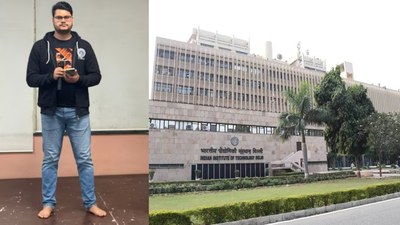
Rishikesh Kumar’s family watched him slip further into despair in the days before he died.
Rishikesh, a 31-year-old MSc Physics student at IIT Delhi, had all but vanished from his own life.
His brother, Abhishek, said he stopped doing the usual things—barely touched his phone, left his laptop unopened, barely said a word to anyone at home.
He called himself a “huge loser,” told his mom he was getting suicidal thoughts, and just kept withdrawing, day by day.
Abhishek remembers the change was sudden and frightening.
All week, they watched him lose interest in nearly everything. The whole family started talking seriously about getting him proper help—maybe a doctor, maybe counseling—because it was obvious he was in trouble.
“He felt like he’d failed at everything,” Abhishek said. “He abandoned all his routines. At one point, he told my mother, ‘Mummy, there’s so much going on in my mind. I feel like such a loser. I have suicidal thoughts.’”
The family believes that what happened at IIT Delhi played a huge part in his decline. In the days before Rishikesh died, they say, some interactions with the institute’s administration left him feeling deeply humiliated.
The family wants those events looked at in any investigation.
This wasn’t the first time Rishikesh had shown signs like this. His family would step in, try to counsel him, talk him down.
“Once, he told my mother, ‘Mummy, I went there to die, but I couldn’t even do that.’” His mother’s words, and thoughts of her, sometimes brought him back from the brink.
The night before he died, they sat him down and spoke for a long time. They were on the verge of taking him to see a doctor again, to get some serious help.
But the next morning, while his mom was still asleep, Rishikesh quietly left their rented two-room apartment and headed for the IIT Delhi campus.
His family hadn’t been able to get him a hostel spot through the institute, so they’d found this apartment for him and his mom near school.
After the news broke, no one from IIT Delhi called the family. “The police called me, not the institute,” Abhishek said.
“No one from IIT came to visit or even contacted us. Everything we know, we heard from the police.”
Rishikesh’s family is demanding a full inquiry—a real investigation that holds people responsible, so nobody else has to go through this.
“All we want is accountability,” Abhishek said. “This happened to my brother today; tomorrow it could be someone else’s brother, or another student.
Students come to IIT chasing lifelong dreams. They give up so much just to get here. We don’t want another family to go through this—ever again.”
After Rishikesh’s death, protests erupted on IIT Delhi’s campus. Students demanded answers—why did this happen?
What led up to it? The institute set up a five-member External Inquiry Committee, which includes former Uttarakhand DGP and IIT Delhi alumnus Ashok Kumar and the head of Psychiatry from AIIMS New Delhi, Prof Pratap Sharma.
The committee was announced just a day after hundreds of students gathered on campus, demanding the truth.
Now, the family’s allegations—about Rishikesh’s mental health, his treatment at the institute, and everything that happened in those final days—are due to be examined as part of the inquiry.
[ad_2]